

Introduction: Why Understanding the Workload Curve Matters
When students think about pursuing a PGDM, they usually focus on placements, fees, and college rankings. However, one critical factor often gets ignored — how your workload evolves during the program and after it.
The Workload Adaptation Curve in PGDM Careers explains how students gradually adjust to increasing academic pressure, corporate expectations, and real-world responsibilities. Understanding this curve helps you prepare mentally, academically, and professionally.
Moreover, if you aim to study at a TOP PGDM College in India or a Top Private PGDM College in India, this awareness becomes even more important. The better the college, the sharper the learning curve.
What is the Workload Adaptation Curve in PGDM?
The workload adaptation curve refers to the progressive increase in pressure and responsibility that a PGDM student experiences over time.
At the beginning, tasks feel overwhelming. However, as time passes, students develop skills, confidence, and efficiency. Eventually, they start handling complex tasks with ease.
Simple Breakdown:
| Phase | Experience Level | Workload Feel |
|---|---|---|
| Phase 1 | Beginner | Overwhelming |
| Phase 2 | Adjusting | Manageable |
| Phase 3 | Skilled | Productive |
| Phase 4 | Industry Ready | Confident |
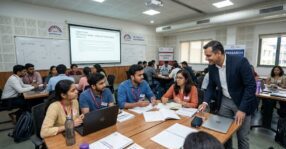
Phase 1: The Shock Phase (First 1–3 Months)
At the start of your PGDM journey, everything feels fast-paced.
You deal with:
- Case studies
- Assignments
- Presentations
- Group discussions
- Deadlines
Initially, students struggle because the teaching style is very different from graduation. Unlike theoretical learning, PGDM focuses on practical business problem-solving.
Common Challenges:
- Time management issues
- Communication gaps
- Lack of clarity in concepts
- Pressure of peer competition
However, this phase is essential. It builds your foundation.
Students studying in institutions like GNIOT Institute of Management Studies (GIMS) often experience structured onboarding, which helps reduce this initial shock.
Phase 2: The Adjustment Phase (3–8 Months)
Gradually, things start making sense.
Students begin to:
- Understand case study formats
- Improve presentation skills
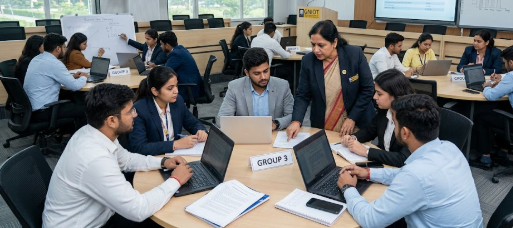
- Learn teamwork dynamics
- Manage deadlines better
At this stage, confidence improves. Moreover, students develop routines that help them handle workload efficiently.
Key Skills Developed:
- Time management
- Business communication
- Analytical thinking
- Group coordination
This is where the difference between an average college and a Best PGDM College in India becomes visible. Top colleges provide mentorship, industry exposure, and structured learning systems.
Phase 3: The Acceleration Phase (Internship & Specialization)
This phase is a turning point.
Students now:
- Choose specialization (Marketing, Finance, HR, etc.)
- Work on live projects
- Prepare for internships
- Face real corporate expectations
Why This Phase Matters
Internships introduce you to real workload pressure. Unlike classroom tasks, corporate work demands:
- Accountability
- Speed
- Accuracy
- Professional communication
Students who adapt well here often secure Pre-Placement Offers (PPOs).
Internship Workload Reality
| Aspect | College Work | Internship Work |
|---|---|---|
| Deadlines | Flexible | Strict |
| Feedback | Academic | Performance-based |
| Responsibility | Shared | Individual |
| Output | Learning-based | Result-based |
Clearly, this stage shapes your career trajectory.
Phase 4: The Mastery Phase (Final Year to Job Transition)
Now, students become confident professionals.
They can:
- Handle multiple projects
- Lead teams
- Make decisions
- Communicate effectively
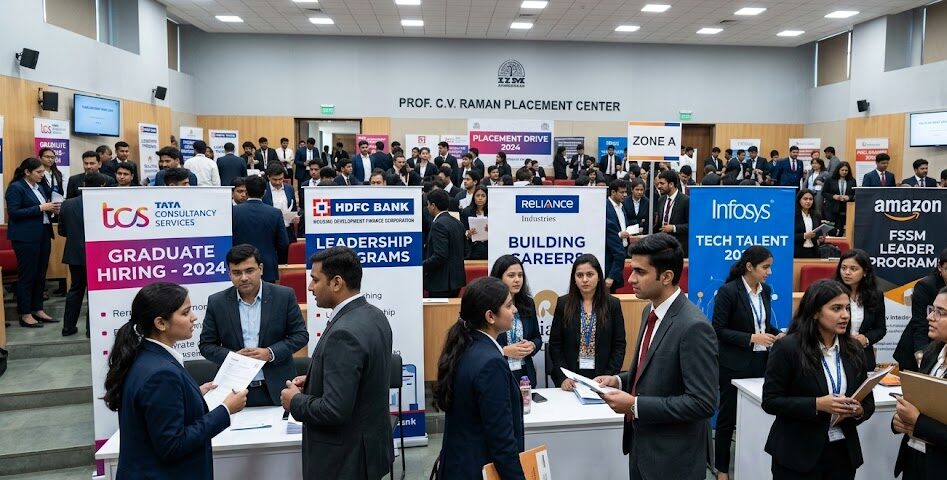
Moreover, placement preparation intensifies during this stage.
Placement Readiness Includes:
- Mock interviews
- Resume building
- Aptitude tests
- Industry knowledge
Students from a Top 10 PGDM College in India often show faster adaptation because they have already faced high-pressure environments.
Workload Curve vs Career Growth
Interestingly, workload and career growth are directly connected.
Relationship Insight:
| Workload Level | Skill Growth | Career Impact |
|---|---|---|
| Low | Slow | Limited growth |
| Medium | Stable | Moderate growth |
| High (Managed) | Rapid | Strong career growth |
So, instead of avoiding workload, students should learn to manage and leverage it.
Why Top PGDM Colleges Create a Steeper Curve
Top institutions intentionally design challenging environments.
Reasons:
- To simulate real corporate pressure
- To improve decision-making ability
- To build resilience
- To prepare students for leadership roles
For example, colleges like GNIOT Group of Institutions integrate:
- Industry projects
- Corporate mentorship
- Real-time business simulations
As a result, students become industry-ready faster.
Common Mistakes Students Make
Even though the curve is natural, many students struggle due to avoidable mistakes.
Major Mistakes:
- Ignoring time management
- Avoiding group work
- Focusing only on marks
- Not participating in activities
- Delaying skill development
These mistakes slow down adaptation and reduce placement opportunities.
How to Adapt Faster: Practical Strategies
Adapting to workload is a skill. Fortunately, it can be learned.
1. Build a Daily Routine
Consistency reduces stress. Plan your day in advance.
2. Prioritize Tasks
Use the urgent vs important method to manage workload.
3. Improve Communication Skills
Strong communication reduces confusion and improves teamwork.
4. Learn from Seniors
Their experience can help you avoid common mistakes.
5. Use Technology Smartly
Tools like:
- Notion
- Trello
- Google Calendar
can help manage deadlines efficiently.
Role of Faculty & Industry Exposure
Faculty support plays a huge role in workload adaptation.
Good colleges provide:
- Mentorship
- Feedback sessions
- Industry interaction
Moreover, guest lectures and corporate workshops bridge the gap between theory and practice.
PGDM Workload vs MBA Workload
Many students ask whether PGDM is harder than MBA.
Comparison:
| Factor | PGDM | MBA |
|---|---|---|
| Curriculum | Industry-focused | University-based |
| Flexibility | High | Moderate |
| Workload | High | Medium |
| Practical Exposure | Extensive | Limited |
Thus, PGDM has a steeper workload curve, but it also offers better industry readiness.
Emotional & Mental Adaptation
Workload is not just academic. It also affects mental strength.
Students may feel:
- Stress
- Self-doubt
- Competition pressure
However, with time, they develop:
- Confidence
- Emotional intelligence
- Problem-solving mindset
Therefore, mental adaptation is as important as academic adaptation.
ROI Perspective: Is the Workload Worth It?
Students often evaluate PGDM based on ROI.
Key Insight:
High workload → Better skills → Better placements → Higher ROI
So yes, the workload is absolutely worth it.
Especially in a Top Private PGDM College in India, students gain:
- Industry exposure
- Placement support
- Skill-based learning
How GNIOT Supports Workload Adaptation
Institutions like GNIOT Institute of Management Studies (GIMS) focus on structured development.
Key Features:
- Industry-oriented curriculum
- Regular assessments
- Corporate training sessions
- Internship opportunities
- Placement guidance
As a result, students adapt faster and perform better in corporate roles.
Career Outcomes After Adaptation
Once students successfully adapt, they unlock strong career opportunities.
Common Roles:
- Business Analyst
- Marketing Manager
- Financial Analyst
- HR Manager
- Consultant
Salary Growth Potential:
- Entry Level: ₹4–8 LPA
- Mid-Level: ₹8–15 LPA
- Senior Level: ₹15–30+ LPA
Clearly, adaptation leads to long-term success.
Final Thoughts: Turning Pressure into Performance
The Workload Adaptation Curve in PGDM Careers is not a barrier. Instead, it is a growth journey.
At first, it feels difficult. However, with time, effort, and the right environment, students transform into confident professionals.
Therefore, when choosing a TOP PGDM College in India, do not just look at placements. Also consider:
- Learning environment
- Industry exposure
- Skill development opportunities
Because ultimately, your ability to adapt defines your success.
FAQs
1. Is PGDM workload very difficult?
Initially, yes. However, students adapt within a few months with proper time management.
2. How long does it take to adjust to PGDM workload?
Most students adapt within 3–6 months.
3. Does workload affect placements?
Yes. Students who manage workload effectively perform better in placements.
4. Which is better for workload handling: MBA or PGDM?
PGDM is more intensive but offers better industry exposure.
5. How can I reduce PGDM stress?
Focus on planning, communication, and consistent learning.