

Quick Highlights
- Course Duration: 2 Years
- Average Fees: ₹3 Lakhs – ₹15 Lakhs
- Average Package: ₹5 LPA – ₹20 LPA
- Top Recruiters: Deloitte, Accenture, HDFC Bank, Infosys, EY, KPMG
- Admission Mode: CAT / XAT / MAT / CMAT / Direct Admission
Table of Contents
- What Does Career Optionality Mean?
- Why First Job After MBA Is Overrated
- Career Optionality vs First Job: Key Differences
- Why Career Optionality Matters in Today’s MBA Landscape
- How MBA Colleges Influence Career Optionality
- Role of Institutions like GNIOT (GIMS) in Career Flexibility
- Key Factors That Build Career Optionality
- Role of Skills, Internships & Certifications
- Specialization Choice & Its Impact on Career Options
- ROI Perspective: Optionality vs First Salary
- Budget MBA Colleges & Career Growth Opportunities
- Common Mistakes Students Must Avoid
- How to Choose the Right MBA College for Career Optionality
- Future Career Trends MBA Students Must Prepare For
- Final Conclusion: Think Beyond First Job
- FAQs on Career Optionality After MBA
What Does Career Optionality Mean After MBA?
Most students focus only on one thing—“Which job will I get after MBA?”
However, the smarter question is:
“How many career options will I have after MBA?”
This is where career optionality becomes important.
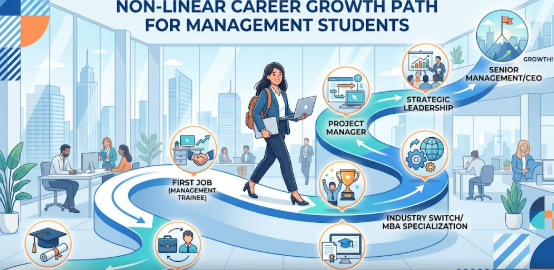
Career optionality means:
- Freedom to switch roles
- Ability to explore industries
- Flexibility to grow faster
In simple terms, it’s not about your first job, but your long-term career freedom.
Why First Job After MBA Is Overrated
Many students believe that getting placed in a top company is everything. But in reality, your first job is just the starting point.
Here’s why:
- Most professionals change jobs within 1–2 years
- Career growth depends on skills, not first company
- Industries evolve quickly
So, even if you start with an average job, you can still build a strong career—if you have options.
Career Optionality vs First Job: Real Difference
| Factor | First Job Focus | Career Optionality Focus |
|---|---|---|
| Goal | Immediate placement | Long-term growth |
| Risk | High (depends on one role) | Low (multiple paths) |
| Growth | Limited | Flexible |
| Salary Growth | Slow | Faster over time |
| Career Satisfaction | Uncertain | Higher |
Clearly, optionality gives you more control over your career.
Why Career Optionality Matters in Today’s MBA Landscape
The job market is changing fast. Therefore, students must prepare differently.
1. Industries Are Evolving
Today’s top roles didn’t exist 10 years ago. Similarly, future jobs will keep changing.
So, if you limit yourself to one role, you risk becoming outdated.
2. Skills Are More Important Than Job Titles
Companies now value:
- Problem-solving
- Data skills
- Communication
As a result, your ability to adapt matters more than your first designation.
3. Career Switching Is Common
MBA graduates often switch between:
- Marketing → Product Management
- Finance → Consulting
- Operations → Analytics
This flexibility comes only with strong career optionality.
How MBA Colleges Influence Career Optionality
Not every MBA college provides equal flexibility.
If you choose a TOP MBA College in India with low fees, make sure it focuses on:
- Multi-domain exposure
- Industry projects
- Skill-based learning
For example, institutions like GNIOT Institute Of Technology focus on holistic development, not just placements.
At GNIOT:
- Students explore multiple domains
- Training includes real-world business scenarios
- Placement support aligns with career goals
This approach increases long-term career options.
Key Factors That Build Career Optionality
To maximize your MBA outcome, focus on these factors:
1. Skill Diversity
Learn across domains:
- Marketing basics
- Finance fundamentals
- Data tools
This makes you adaptable.
2. Internships & Live Projects
Practical exposure helps you:
- Understand industries
- Build experience
- Improve decision-making
3. Networking
Strong connections help in:
- Job switching
- Career growth
- Industry insights
4. Certifications
Add value with:
- Digital marketing
- Business analytics
- Financial modeling
Role of Specialization in Career Optionality
Many students worry about choosing the “perfect” specialization. However, the truth is different.
Flexible Specializations:
- Marketing + Analytics
- Finance + FinTech
- HR + Analytics
These combinations increase opportunities.
ROI Perspective: Why Optionality Matters More
Students often choose the Best MBA College In India based on placement package.
But consider this:
| Criteria | First Job Focus | Career Optionality Focus |
|---|---|---|
| Initial Salary | High | Moderate |
| Growth (5 Years) | Uncertain | High |
| ROI | Risky | Strong |
| Stability | Low | High |
So, even if your starting salary is slightly lower, optionality ensures better long-term ROI.
Budget MBA Colleges & Career Optionality
Many Top Private MBA College In India options are expensive. However, budget colleges can also deliver strong outcomes.
If they provide:
- Industry exposure
- Skill training
- Internship support
Then students can build strong optionality.
Institutes like GIMS balance:
- Affordable fees
- Practical learning
- Placement opportunities
This makes them a smart choice for ROI-focused students.
Common Mistakes Students Make
Avoid these mistakes if you want strong career optionality:
- Choosing college only for placement numbers
- Ignoring skill development
- Not doing internships seriously
- Following crowd decisions
Instead, focus on building a flexible career foundation.
How to Choose MBA College for Career Optionality
Follow this simple strategy:
Step 1: Check Exposure
Does the college offer:
- Multiple domains
- Industry projects
Step 2: Evaluate Curriculum
Is it:
- Practical
- Updated
Step 3: Analyze Placement Data
Focus on:
- Average salary
- Role diversity
Step 4: Compare ROI
Choose a TOP 10 MBA College in India that balances:
- Fees
- Career growth
Future Career Trends You Must Prepare For
Career optionality is becoming more important due to these trends:
- AI & automation changing job roles
- Hybrid roles increasing (Marketing + Tech)
- Startups offering diverse opportunities
- Gig economy growth
Therefore, flexibility is the key to long-term success.

Final Conclusion
Your first job after MBA is important—but it is not everything.
What truly matters is:
- How many options you have
- How fast you can grow
- How easily you can switch roles
If you choose the right college and focus on skills, your career will not depend on one job.
Instead, it will grow with multiple opportunities and long-term success.
So, when selecting an MBA college, don’t just ask:
“What job will I get?”
Ask:
“What kind of career freedom will I have?”
That question will change your future.
FAQs
1. What is career optionality after MBA?
It means having multiple career paths, flexibility, and growth opportunities after completing your MBA.
2. Is first job after MBA very important?
It is important, but long-term growth depends more on skills and flexibility.
3. How can I increase career optionality?
Focus on:
- Skills
- Internships
- Networking
- Certifications
4. Do budget MBA colleges provide good career options?
Yes, if they offer strong practical exposure and placement support.
5. Which is better: high salary or career flexibility?
Career flexibility is better for long-term growth and stability.