
Astro-Data Sovereignty: Governance Models for Extraterrestrial Data and the Corporate Colonization of Space Assets

In an era when private corporations are no longer content with satellites alone, Astro Data Sovereignty Governance instead aspire to establish data colonies on the Moon, asteroids, or in stable Earth orbits, the concept of astro-data sovereignty emerges as critical. For the students and faculty at PGDM institute in Greater Noida, for faculty at PGDM


Read More

The Chrono-Economic Paradox: Valuing Assets in Markets with Non-Linear Time Perception

In an era where technology Chrono Economic Time Valuation reshapes not just how we work but how we perceive time itself, the boundaries of financial valuation and human productivity are undergoing an unprecedented transformation.At GNIOT Institute of Management Studies (GIMS)—a Top PGDM college in Greater Noida—students and researchers are exploring the intersection of cognitive technology,

Read More

Bio-Sourcing: Managing the Global Supply Chain of ‘Engineered Life’ and the Value of Time-Stamped Genetic Data

In today’s age of rapid technological advancement, Engineered Life Supply Chain organizations no longer rely only on machines or software for innovation. A new revolution has begun—bio-sourcing, where companies use synthetic biology to create and manage living organisms as part of their supply chains. This field combines supply chain management, finance, and R&D strategy, and

Read More

Corporate Strategy in the Age of Cognitive Off-Loading: The Outsourcing of Human Intelligence

In the rapidly evolving landscape of corporate management,Cognitive Off-Loading Strategy organizations are witnessing a paradigm shift: employees can now “off-load” complex knowledge through advanced brain-computer interfaces (BCI) and cloud-based synthetic memory. At GNIOT Institute of Management Studies (GIMS)—a Top PGDM college in Greater Noida—students are learning how this transformative technology reshapes corporate strategy, organizational behavior,

Read More

The Ethics of Pre-Crime Finance: Re-engineering Risk Models with Predictive Cognitive AI

In the evolving landscape of Pre-Crime Finance Ethics the corporate governance, risk management has reached a new frontier. The integration of predictive cognitive AI — autonomous systems capable of analyzing vast troves of transactional, biometric, and behavioral data — has enabled organizations to identify potential financial misconduct before it occurs. This paradigm, often described as

Read More

Quantum Leadership: The Paradox of Strategy in a Non-Deterministic Business Landscape

In an era where uncertainty defines progress, management and leadership are entering a quantum age. This article explores the Quantum Leadership Strategy Paradox, where non-determinism reshapes how organizations plan, decide, and lead. At GNIOT Institute of Management Studies (GIMS) — a leading PGDM institute in Greater Noida — such futuristic concepts are shaping the next

Read More

The Economics of Near-Earth Asteroid Mining: A Venture Capital and Risk Management Framework

Humanity stands at the edge of a new economic frontier—one that extends far beyond Earth’s boundaries. As space exploration evolves from government-led missions to private ventures, a new sector is emerging: Near-Earth Asteroid (NEA) mining. This once science-fiction concept is now attracting venture capital interest, scientific attention, and entrepreneurial vision. The economics of asteroid mining

Read More

Neuro-Marketing Consumer Ethics in Metaverse

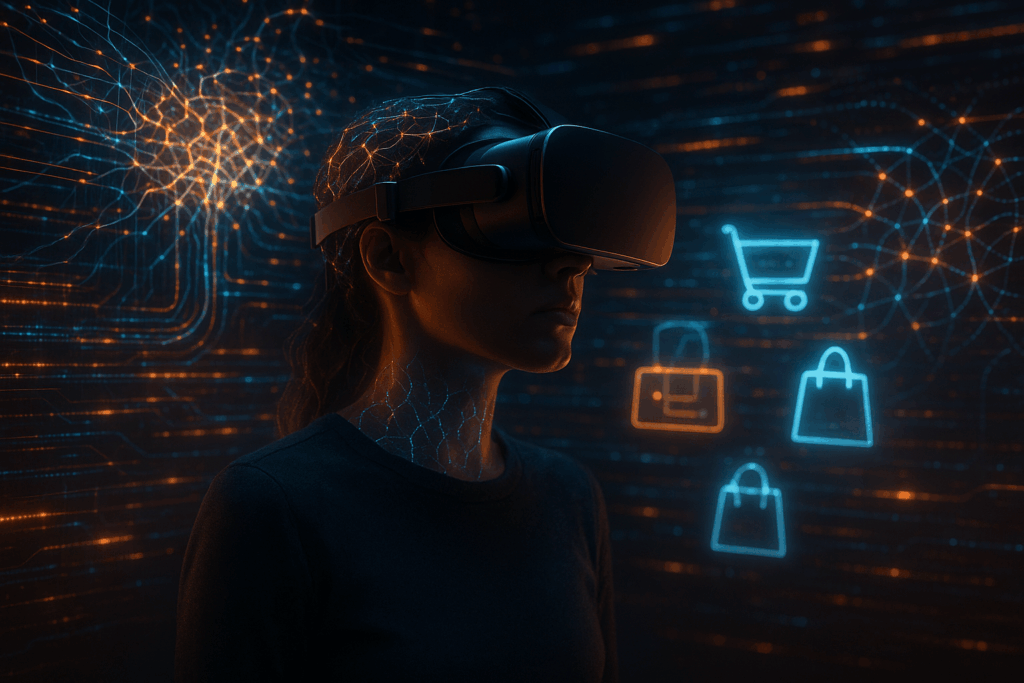
In today’s immersive digital economy, Neuro-Marketing Consumer Ethics has emerged as one of the most debated topics in the marketing world. The Metaverse—an evolving virtual ecosystem combining augmented reality (AR), virtual reality (VR), and haptic feedback—has revolutionized how consumers interact with brands. However, this innovation also brings new ethical dilemmas. Neuro-marketing analyzes brain activity and

Read More

De-Globalization and Hyper-Localization: Strategic Responses in a Fragmented World

In recent years, global trade has begun to fray. The twin forces shaping this shift — known collectively as the Deglobalization Hyperlocalization Impact — are redefining how firms design supply chains, serve customers, and compete. Protectionist policies, geopolitical tensions, and consumer demand for locally sourced goods are steering firms away from the once-trusted global model

Read More